Is It Healthy to Let a Cat Lick a Babys Mouth
Last reviewed on Jan 22, 2016
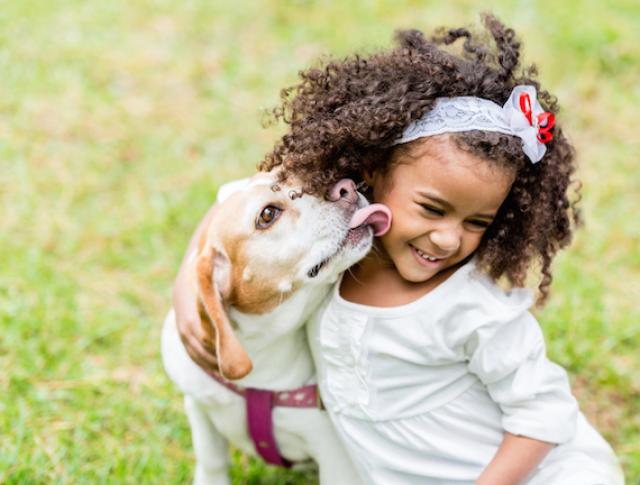
Your veterinarian tells you to avoid letting your pets lick the faces of the family unit. She lists the numerous parasites and leaner perhaps present in pet saliva that may touch family members. All the same recent research suggests that the ancient practice of dog licking may indeed assist wound healing. My weblog from two week agone looked at new research suggesting that dog intestinal bacteria may accept a protective role confronting asthma in children.
Then, is pet saliva a health hazard or benefit? The answer is probably both. However, routine veterinary care and elementary germ-free practices can reduce fears that your pet's lick is a family unit health risk.
Why Are Pets Wellness Hazards?
The mouth and the intestines of pets can harbor bacteria and parasites that tin can be transmitted to humans. They can cause an assortment of medical weather condition in humans. Diseases transmitted from animals to humans are called "zoonotic" (zo-not-ick).
Bacteria:
Pastuerella is a normal inhabitant of the oral cavity in cats and dogs that tin can crusade skin, lymph node and, sometimes, more astringent infections. Bartonella henselae, a bacterium that is transmitted to cats from fleas is also housed in the cats' mouths. It is the crusade of a severe pare and lymph node infection called true cat-scratch-fever. Theoretically, humans can be infected by these bacteria by coming in contact with the saliva from a cat or dogs lick. The Center for Disease Command reports that most pastuerella and bartonella infections are the result of bites and scratches. Little data are bachelor to substantiate that being licked by a pet is a major means of infection
Salmonellla, E. coli, Clostridia and Campylobacter are intestinal leaner of pets that can cause severe intestinal affliction in humans. The pets can be gratuitous of symptoms yet pass these leaner in their feces (poop). Nigh homo infection is by and large due to oral contact of hands contaminated by the pet's feces or fecal residue. Because pets lick their anus (barrel), these bacteria can as well be present in the mouth. Facial and lip licking is a potential route of infection from pet to human. Over again, in that location is little proof that this is actually a major ways of transmission.
Parasites:
Pets are hosts for many parasitic worms and single celled parasites. Human infection from these parasites tin can event in abdominal affliction, pare problems, blindness, and brain disorders. Pets may alive with these parasites in their intestines with no signs of illness. But eggs passed in the pet's carrion tin infect humans. Like bacteria, the major route of infection to humans is fecal-oral. Pets that have licked their anus can potentially pass the parasite eggs to humans during facial licking.
With the exception of two single celled parasites, Giardia and Cryptosporidia, this blazon of infection is not likely. Most parasite eggs are not infective directly from the anus. They must undergo a period of maturation in the feces or contaminated environment in guild to infect humans. Transmission to humans would crave dogs licking human being faces after mouthing or eating feces that was 1 to 21 days onetime, depending on the parasite. Because cats are not carrion eaters (coprophagic), humans are unlikely to become infected by parasites from their cats.
Giardia and Cryptosporidia are immediately infective then potentially could exist transmitted by a lick.
The Benefits of Pet Saliva
The belief in the curative power of a dog'due south lick dates dorsum to ancient Egypt and has persisted through time. In modern French republic a medical saying translates to "A Canis familiaris's Tongue is a doctor'southward tongue." Recent enquiry has identified products in saliva that indeed assist in healing.
- Researchers in holland identified a chemical in pet saliva called histatins. Histatins speed wound healing past promoting the spread and migration of new skin cells.
- Dr. Nigel Benjamin of the London School of medicine has shown that when saliva contacts skin information technology creates nitric oxide. Nitric oxide inhibits bacterial growth and protects wounds from infection.
- Researchers at the Academy of Florida isolated a protein in saliva called Nerve Growth Factor that halves the time for wound healing.
Prudent Precautions With Pet Saliva
The risk of bacterial or parasitic infection from pet licks are the greatest for very young children, the anile, and immunosuppressed individuals on chemotherapy or inflicted with AIDS. Individuals with salubrious immune systems are unlikely to become infected. Despite the relatively low take chances of infection from pet licks, some sensible precautions by pet owners are in order. The Companion Beast Parasite Council recommends:
- Regular deworming programs
- Annual pet fecal examinations with appropriate anti-parasite treatment
- Handling to command fleas and ticks
- Daily disposal of pet feces and compliance with pooper-scooper laws
- Covering children's sandboxes when non in use
- Feeding cooked, canned, or dry dog or cat food
- Washing or cooking vegetables for human consumption
- Adequate hand washing subsequently exposure to feces or fecal contamination.

Dr. Ken Tudor
Related
The Tongue Does Not Heal All Wounds
Should We Let Pets Make clean Their Own Wounds?
Image: Andresr / Shutterstock
Source: https://www.petmd.com/blogs/thedailyvet/ktudor/2014/jan/are-dog-licks-unhealthy-for-people-31207
0 Response to "Is It Healthy to Let a Cat Lick a Babys Mouth"
إرسال تعليق